
Filing a Water Damage Insurance Claim in Arizona
High anxiety, high intent, thin on page one. The sudden-and-accidental versus gradual distinction that decides most claims, documentation before mitigation, the adjuster process, and the deductible arithmetic.
Sudden-and-accidental versus gradual — the line that decides most claims
Most water-damage claims turn on a single distinction: was the loss sudden and accidental, or was it gradual. A burst supply line, a water-heater tank failure, a microburst that forces an opening — these are sudden and accidental and generally covered. A slow leak behind a wall that has been weeping for months, long-term condensation, or a known unrepaired drip — these are gradual and typically excluded.
The carrier determines which category the loss falls into from the evidence: the condition of the failed part, the staining and growth pattern, and the timeline. That is why documentation matters — a sudden failure looks sudden if it is photographed and logged the same day, and a clean Category 1 loss documented before it degrades is easier to file than a Category 2 loss discovered a week later.
Documentation before mitigation
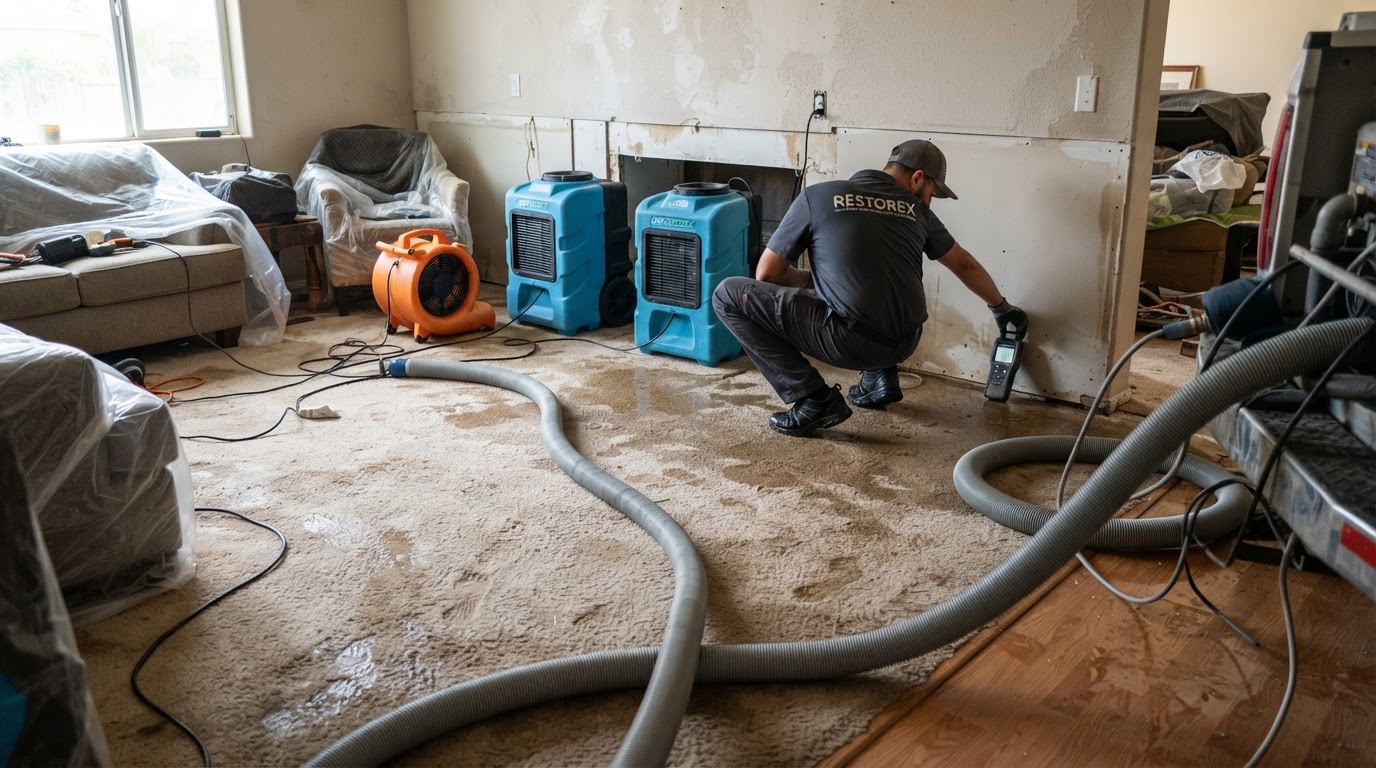
The instinct is to start cleaning immediately — and you should begin stopping the loss — but document before and during mitigation. Photograph the standing water, the source, and every affected room before extraction; keep the moisture logs and psychrometric readings from the drying process; and preserve the failed part if it is relevant. The adjuster reconstructs the loss from that record.
We provide the documentation package as part of the scope — daily moisture logs, psychrometric readings, photo documentation — specifically so the file is built for the adjuster from the first hour. Mitigation and documentation are not separate; they happen together.
The adjuster process
Once you file, the carrier assigns an adjuster who reviews the documentation, may inspect the loss in person, and determines the covered scope under your policy. Direct insurance billing means we work with the adjuster on your behalf — the estimate, the scope, and the documentation — and you pay your deductible. The reconstruction is a separate scope and often a separate adjuster visit.
The key is that the adjuster sees a fully documented loss, not a partial one. A loss with moisture logs, photos, and a clear cause is faster to settle than one the adjuster has to reconstruct from memory or after-the-fact photos.
Sewer and drain backup — and the deductible arithmetic
Sewer and drain backup requires a separate endorsement on most policies, commonly sublimited at $5,000–$25,000. Without the endorsement, a Category 3 backup — sewage, ground-surface water — is often out-of-pocket, and the scope is larger because Category 3 requires full containment and porous-material removal. Knowing whether you carry the endorsement before a loss is worth the call to your agent.
And the deductible arithmetic that nobody on page one says plainly: percentage deductibles of 1–3% of dwelling value against a Mesa median home around $408,000 means a 2% deductible is $8,160. A smaller loss — a caught-early supply-line leak that costs $4,000 to mitigate — may not be worth claiming at all, because the deductible exceeds the loss. Being the page that says so plainly earns the trust the sales pages do not.
Frequently Asked Questions
What is the difference between sudden-and-accidental and gradual water damage?+
Sudden and accidental — a burst supply line, a water-heater tank failure, a microburst opening — is generally covered. Gradual damage from a slow leak, long-term moisture, or a known unrepaired issue is typically excluded. The distinction decides most claims.
Should I document before I start drying?+
Yes. Photograph the water, the source, and the affected rooms before extraction begins, and keep the moisture logs and psychrometric readings from the drying process. The adjuster needs the before-and-during documentation to verify the loss.
Is sewer backup covered by homeowners insurance?+
Not by default. Sewer and drain backup requires a separate endorsement, commonly sublimited at $5,000–$25,000. Without the endorsement, a Category 3 backup is often out-of-pocket.
When is a water damage claim not worth filing?+
When the loss is smaller than your deductible. With percentage deductibles of 1–3% of dwelling value against a Mesa median home around $408,000, a 2% deductible is $8,160 — so a smaller loss may cost you more to file than to fix.
Get a free assessment today
Whether it's happening right now or you found a stain this morning, our crew can be on site within 60 minutes. Call the emergency line or send a few details and we'll call you back.
Call (480) 555-0123