
Monsoon Water Damage in Phoenix: What the Season Actually Does
The NWS window, the damage modes nobody explains, and what to do after a monsoon water loss. Published ahead of the June 15 season open.
The monsoon window and what it delivers
The National Weather Service monsoon window runs June 15 through September 30, peaking mid-July through August. The season delivers about 2.56 inches — roughly a third of annual rainfall — but the year-to-year swing is enormous: 9.57 inches in 1984 against 0.15 inches in 2023. A "normal" monsoon does not really exist; a single storm can drop a month's worth of rain in an afternoon.
That variability is why monsoon water damage catches homeowners off guard. A dry season lulls people into skipping gutter and roof maintenance, and then a single microburst or flash flood does the damage a whole wet season would have done somewhere with steadier rain.
Microbursts, haboobs, and flash flooding
A microburst is a collapsing column of air that hits the ground and fans out at 100+ mph. It is the wind event that opens roof penetrations, peels flashing, and drives rain sideways into openings that ordinary rain would never reach. The damage is wind-driven, but the result is water inside the envelope.
A haboob is a dust storm, but its water-damage contribution is indirect: the outflow winds arrive before the rain and silt up drainage — gutters, scuppers, yard drains, and street catch basins. When the rain then falls on blocked drainage, it pools and floods instead of clearing. And flash flooding from an inch of rain in under an hour overwhelms washes and flat roofs alike; the desert ground does not absorb fast enough, so the water moves.
How monsoon water damage happens in a home
The damage modes are specific to the season. Flat-roof pooling is common across the metro's flat and low-slope roof stock — a clogged scupper or parapet drain lets water pond until it finds a seam. Wind-driven rain around roof penetrations, skylights, and window flashing forces water past openings that shed ordinary rain. And wash and yard overflow pushes ground-surface water toward and sometimes into the slab.
The category of water matters here: rainwater entering through a roof penetration is Category 1 clean water if caught fast, but ground-surface water that has crossed soil is Category 3 black water and gets a larger, more expensive scope. Knowing which category the loss is in changes the response and the bill.
What to do after monsoon water damage
Stop the entry if you safely can — tarps, buckets, shut the supply if a line is also involved — then document and call. Photograph the water, the source, and the affected rooms before extraction; the adjuster will need the before-and-during record. A wind-driven-rain entry through a storm-opened penetration is generally a sudden-and-accidental loss and covered.
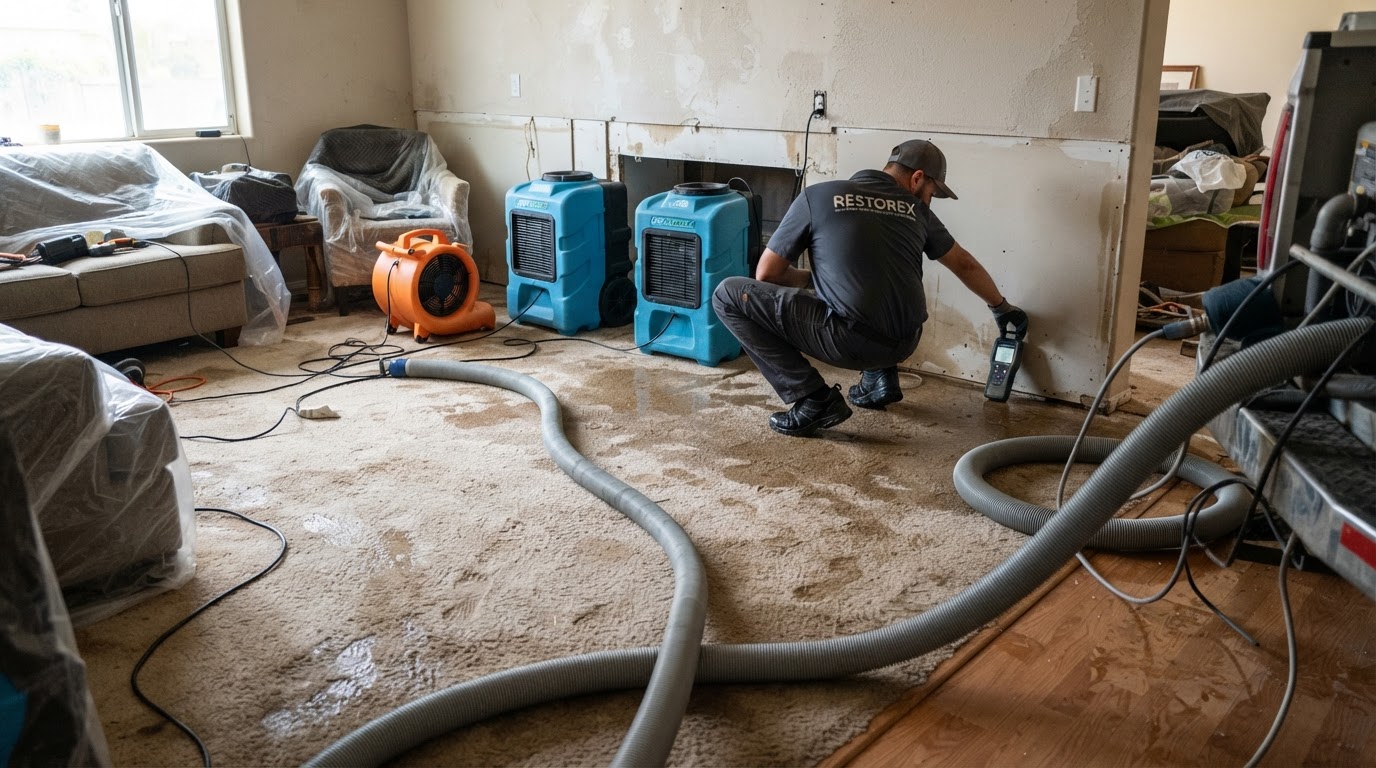
The restoration response is the same IICRC S500 process as any water loss: extract the standing water, hold a drying gradient with LGR dehumidifiers and air movers, verify with moisture meters before any reconstruction, and document the whole loss for the carrier. The monsoon is just the cause; the drying is the same.
Related: our best water damage restoration in Phoenix is the full response when monsoon water enters a home.
Frequently Asked Questions
When is monsoon season in Phoenix?+
The National Weather Service monsoon window runs June 15 through September 30, peaking mid-July through August. The season delivers about 2.56 inches — roughly a third of annual rainfall — but with enormous year-to-year swing.
What causes the most monsoon water damage?+
Flash flooding from an inch of rain in under an hour, microbursts at 100+ mph that open roof penetrations, and wind-driven rain around windows and roof flashing. Flat-roof pooling is also common across the metro's flat-roof stock.
Do haboobs cause water damage?+
Indirectly. A haboob's outflow winds arrive before the rain and silt up drainage — gutters, scuppers, and yard drains. When the rain then falls on blocked drainage, it pools and floods instead of clearing, which is how a dusty wind event turns into a water loss.
Is monsoon water damage covered by insurance?+
Wind-driven rain entering through a storm-opened penetration is generally a sudden-and-accidental loss and covered. Ground-surface flooding rising into the home is a separate flood insurance question, not a standard homeowners peril. We document the cause for the adjuster.
Need help now? Call (602) 584-2897 for water damage restoration in Phoenix.
Get a free assessment today
Whether it's happening right now or you found a stain this morning, our crew can be on site within 60 minutes. Call the emergency line or send a few details and we'll call you back.
Call (602) 584-2897