
Slab Leaks in Arizona: Why They Happen Here More Than Almost Anywhere
Arizona ranks very high for slab-leak risk, and the page-one set is plumbers writing sales pages. Here is the mechanism, the detection methods, and what the water-damage side actually costs.
The mechanism: why Arizona ground attacks pipe
Slab leaks are a water-damage driver that is specific to this region, and the mechanism is geological and chemical rather than the folklore cause people assume.
Expansive clay soils across large parts of Maricopa County shrink and swell with the wet and dry seasons, putting lateral stress on copper and galvanized pipe embedded in or under the slab. Shallow ground temperatures exceed 120°F in summer in the shallow zone where slab lines run, and that heat accelerates the deterioration of the pipe wall. Very hard municipal water scales the interior of lines, narrowing them and raising internal pressure until a weak point gives way. Pre-1990 copper is the most vulnerable stock — it has had the longest to corrode, scale, and fatigue.
The combination is what makes Arizona rank high for slab-leak risk: clay soil that moves the pipe, heat that ages it, hard water that narrows it, and an old copper housing stock that is now 35+ years into its service life. None of those is separable from the others, and all of them are concentrated in the same homes.
Detection: how a slab leak is found
A slab leak announces itself in the bill before it announces itself on the floor. The signs: a sudden spike in the water bill, the sound of running water with no fixture on, a warm spot on the floor (a hot-water line leak), a crack in the slab, or unexplained moisture at the slab edge or baseboard.
We confirm with acoustic detection — listening for the pressure signature of a leak through the slab — and pressure testing to isolate which line is losing pressure. Thermal imaging maps the warm-water signature of a hot-line leak. None of that is destructive; detection is diagnostic before any concrete is touched.
Repair versus reroute versus repipe
A spot repair breaks the slab at the leak and patches the pipe. It fixes the leak but does nothing about the failing line around it, so a second leak nearby is common. Reroute abandons the under-slab section and runs a new line through the attic or walls — often the right call for an isolated hot or cold line, because it keeps the slab intact. Repipe replaces the whole-home supply system and is the answer when multiple leaks indicate the entire original system is failing.
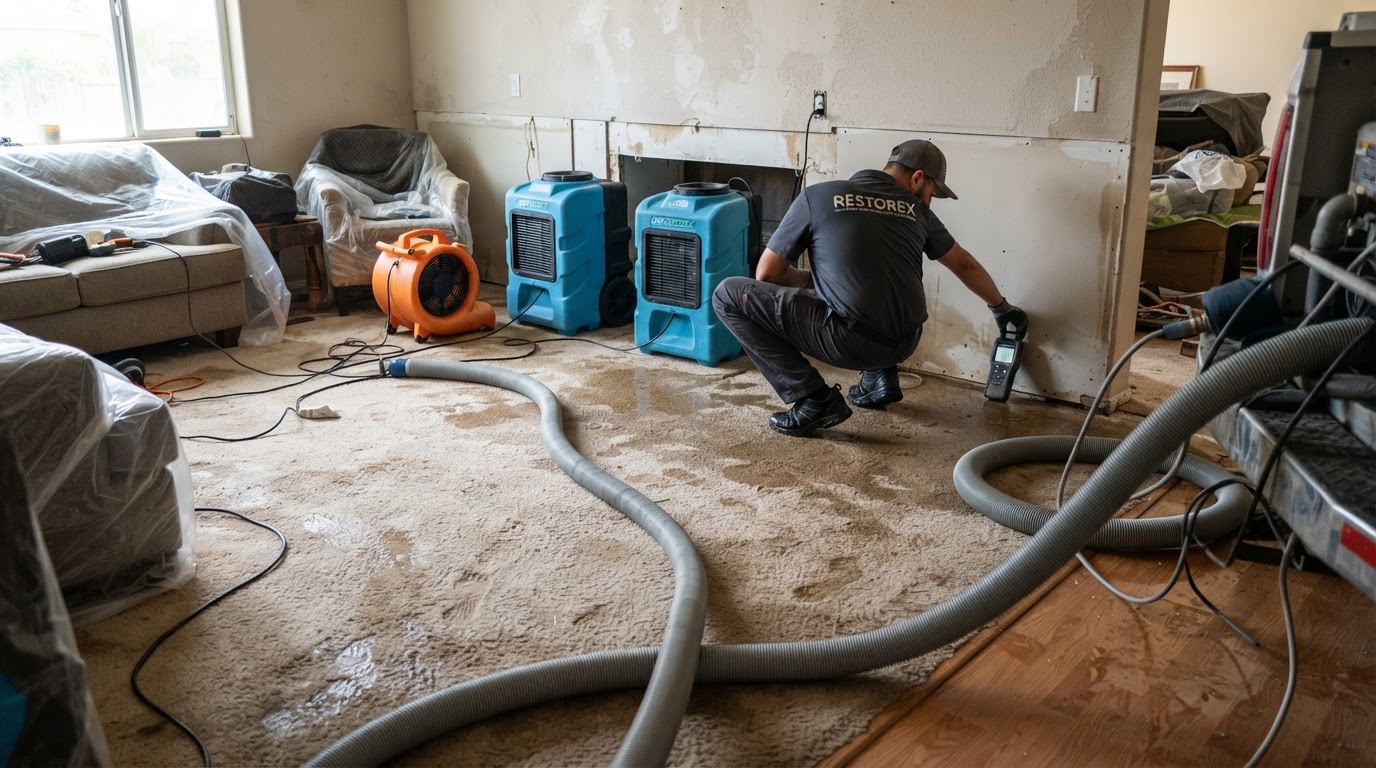
The decision is a plumbing one, but the water-damage side is ours: whatever the repair path, the wet flooring, baseboard, drywall, and any framing must be extracted, dried, and documented for the carrier. The repair stops the leak; the drying stops the secondary damage.
What the water-damage side costs
Typical Phoenix-area water mitigation runs $3,200–$8,500, with reconstruction as a separate line item. A slab leak that wicks across a large floor area and up the drywall costs more than one caught early, because the affected square footage and drying duration are larger. Category 1 clean water from a supply line degrades to Category 2 within 48 hours, so a leak running for days before detection is a larger scope than one caught the same day.
The water bill itself is often the first signal — a sustained unexplained rise can indicate a slow under-slab leak that has been running for weeks. Reading the bill, and reading it early, is the cheapest detection method there is.
Frequently Asked Questions
Why does Arizona have so many slab leaks?+
Expansive clay soils across Maricopa County shrink and swell with the seasons, putting lateral stress on embedded pipe. Shallow ground temperatures exceed 120°F in summer and accelerate deterioration, very hard municipal water scales the interior of lines and narrows them, and pre-1990 copper is the most vulnerable stock.
How do I know if I have a slab leak?+
A sudden spike in the water bill, the sound of running water with no fixture on, a warm spot on the floor, a crack in the slab, or unexplained moisture at the slab edge. We confirm with acoustic detection and pressure testing before any repair.
Should I repair, reroute, or repipe a slab leak?+
A spot repair fixes the leak but does not address the failing line around it. Reroute bypasses the slab entirely and is often the right call for an isolated line. Repipe is the answer when multiple leaks indicate a whole-home problem.
Does homeowners insurance cover slab-leak water damage?+
The resulting water damage from a sudden and accidental slab leak is generally covered; the plumbing repair itself often is not. We document the loss for the adjuster either way.
Get a free assessment today
Whether it's happening right now or you found a stain this morning, our crew can be on site within 60 minutes. Call the emergency line or send a few details and we'll call you back.
Call (480) 555-0123