
Hoarding Cleanup in Mesa: Remediation, Not Just Junk Removal
A hoarding environment is a biohazard and structural remediation job — biological contamination, regulated waste, and water or mold damage hidden under the accumulation. Here is what the work actually involves.
Why hoarding cleanup is a remediation, not a junk removal
A hoarding environment is rarely just clutter. The accumulation typically includes biological contamination — human and animal waste, spoiled food, and mold from chronic moisture — alongside biohazard sharps, expired medications, and structural damage hidden under the weight of stored material. A junk-removal service moves items; a remediation decontaminates the structure and handles the biohazardous material under OSHA protocol.
That is the distinction. The items on top are a sort job; the structure beneath is a biohazard and often a water or mold remediation that has been hidden for years. We handle both, because the structure is where the health risk actually lives once the accumulation is cleared.
The sort: what stays, what goes, what is regulated waste
We sort on site with the occupant or the responsible party. Salvageable belongings are cleaned and retained — documents, photographs, and items of sentimental or practical value are the priority. Grossly contaminated and biohazardous material — anything with biological contamination, sharps, or spoiled content — is disposed as regulated waste through a licensed medical-waste hauler with a documented manifest. The remainder is disposed as standard waste.
Nothing leaves without sign-off. The sensitive part of hoarding work is the sort — an occupant with a hoarding condition experiences the removal as loss, and the work has to happen at a pace the condition allows. We work with the occupant where the condition allows, and with a family member or property manager where it does not.
What we find under the accumulation
Clearing the accumulation is usually when the real job reveals itself. Under the clutter we regularly find:
- Hidden water damage — a slow leak or supply-line failure that has been dripping under stored material for years.
- Mold growth from chronic moisture, often covering large wall and floor areas that have been dark and damp under the accumulation.
- Failed plumbing — lines crushed or stressed by the weight of stored material, or simply aged past service life unseen.
- Structural damage to flooring and subfloor from prolonged moisture and the load of the accumulation itself.
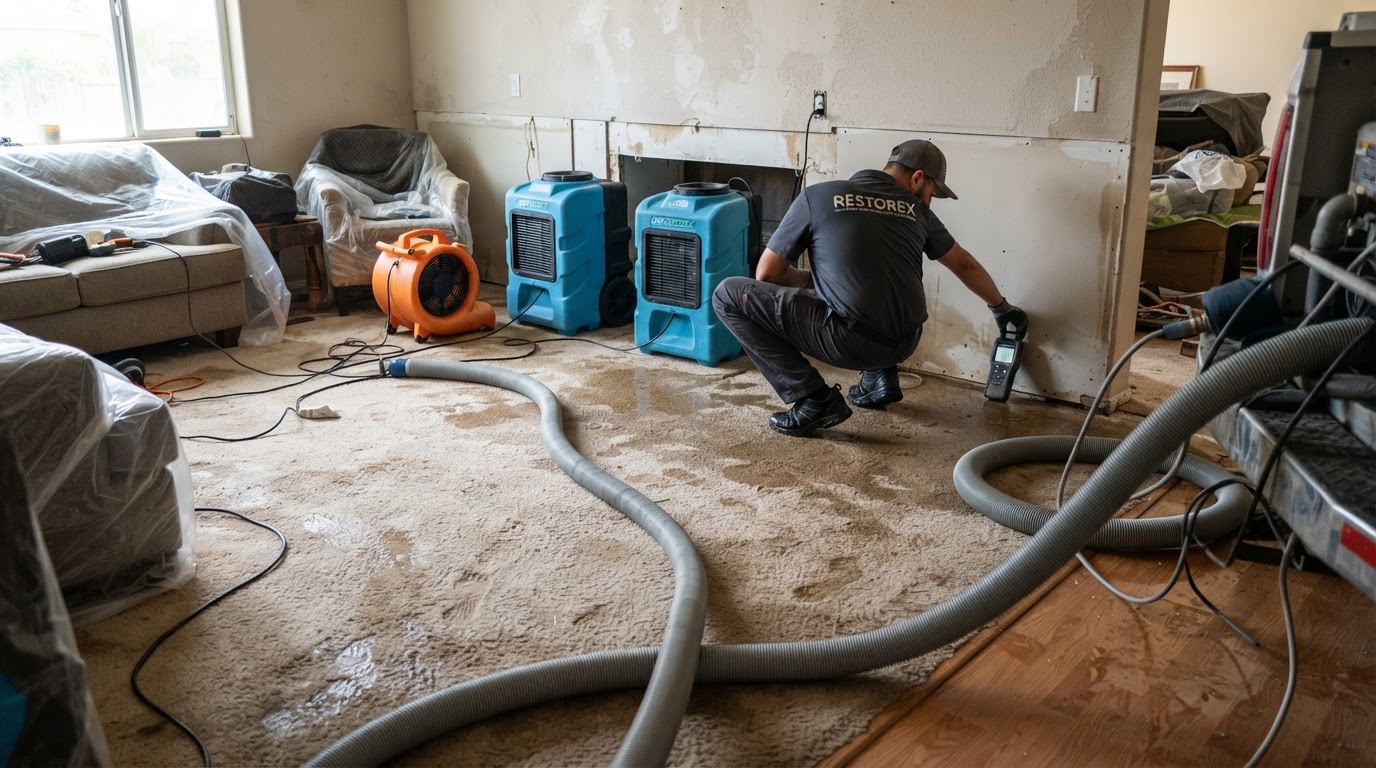
That hidden damage is where hoarding remediation connects to our broader scope — the water extraction, structural drying, and mold remediation that the structure needs once the accumulation is gone. A hoarding cleanup that stops at the sort leaves the health hazard in place.
The decontamination protocol
Once the accumulation is cleared, the structure is remediated under the same bloodborne pathogen and mold protocols we use elsewhere. Full PPE and six-mil containment under negative air where the contamination is widespread; EPA-registered hospital-grade disinfectants on all surfaces; porous material removal where biological contamination has soaked in; and mold remediation under IICRC S520 where hidden mold is present.
The protocol is what makes the structure safe to reoccupy — not the clearing of the clutter alone. A hoarding environment that is decluttered but not decontaminated still carries the biological and mold load that made it a health risk.
What hoarding cleanup costs
Hoarding remediation is priced by the scope — the volume of material, the level of biological contamination, the regulated-waste volume, and the structural damage beneath. A single-room accumulation is a day; a whole-home hoarding environment with hidden water and mold damage can run to several days and a larger rebuild. We scope the site before quoting.
Payment depends on who is responsible — a homeowner, a family, a property manager, or an estate. We bill directly and document the scope for whoever needs the file. Where hidden water or mold damage is involved, the structural remediation may also involve an insurance claim, and we document it accordingly.
The work is sensitive, and the pricing is transparent: we scope first, quote second, and do nothing without sign-off. The goal is a structure that is safe to live in — not just an empty room.
Frequently Asked Questions
Is hoarding cleanup the same as junk removal?+
No. A hoarding environment often includes biological contamination — human and animal waste, spoiled food, mold — alongside biohazard sharps and expired medications, plus structural damage hidden under the accumulation. Junk removal moves items; remediation decontaminates the structure and disposes of biohazardous material as regulated waste under OSHA protocol.
Do you throw everything away?+
No. We sort with the occupant or the responsible party — salvageable belongings are cleaned and retained, biohazardous and grossly contaminated items are disposed as regulated waste, and the structure is then remediated. Nothing leaves without sign-off.
How long does a hoarding cleanup take?+
It depends on the volume and the level of contamination — a single-room accumulation is a day; a whole-home hoarding environment with biological contamination and structural damage can take several days. We scope the site before quoting and schedule accordingly.
What do you find under the accumulation?+
Often hidden water damage or mold that has been growing for years under the clutter, failed plumbing from the weight of stored material, and structural damage to flooring. That hidden damage is where hoarding remediation connects to our water and mold scopes.
Is the work discreet?+
Yes. Unmarked vehicles on request and no branded signage left on site. Hoarding remediation is sensitive work, and discretion is the default — we work at the occupant's pace where the condition allows and coordinate with family or a property manager.
Get a free assessment today
Whether it's happening right now or you found a stain this morning, our crew can be on site within 60 minutes. Call the emergency line or send a few details and we'll call you back.
Call (480) 555-0123