
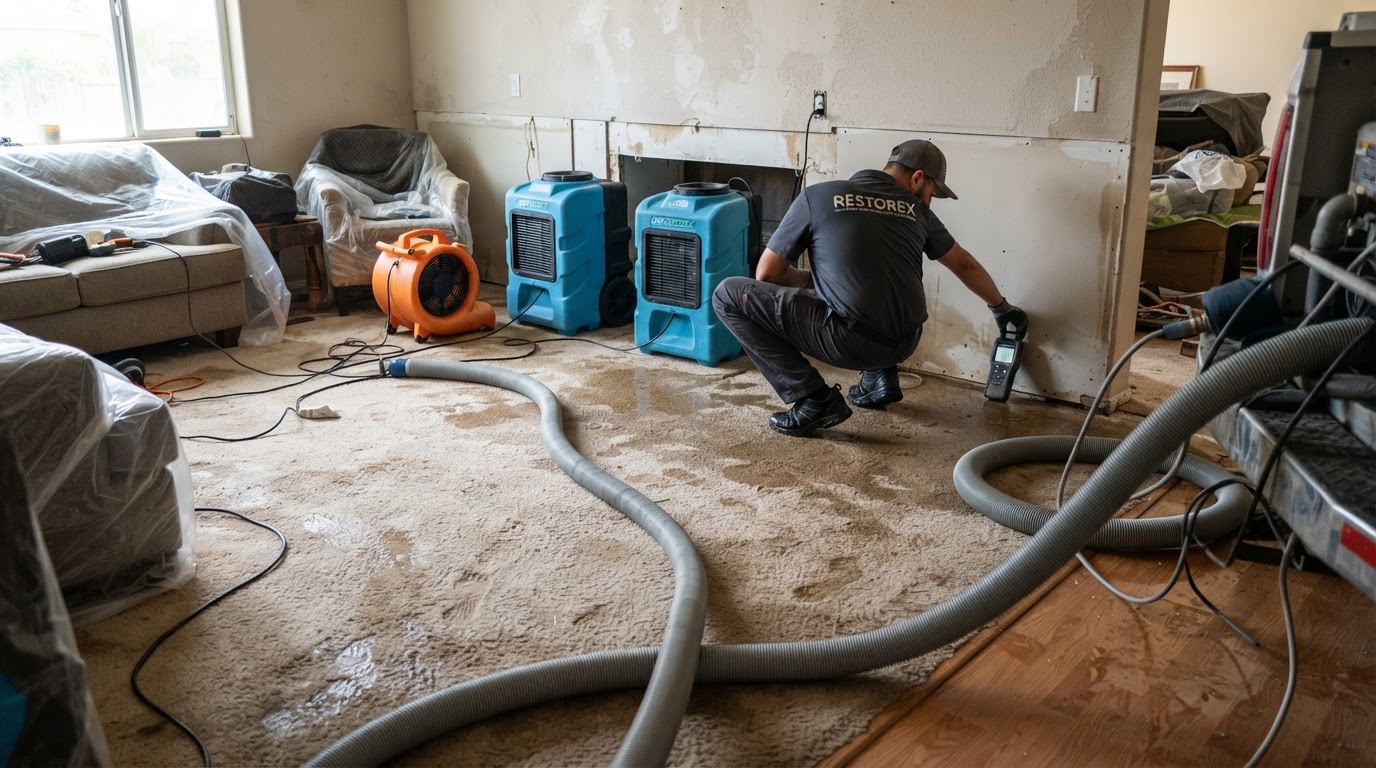
Biohazard Cleanup and Trauma Remediation in Mesa, AZ
Discreet, OSHA-compliant biohazard and trauma cleanup — bloodborne pathogen remediation, unattended death, hoarding, and sewage contamination. Unmarked vehicles, 24/7, crews on site within 60 minutes.
Biohazard Cleanup Services in Mesa
Mesa Water Restoration is Mesa's biohazard and trauma cleanup company, specializing in bloodborne pathogen remediation, unattended death decomposition cleanup, trauma and crime scene decontamination, and hoarding remediation. We serve Mesa and the East Valley with 24/7 emergency response. Work is performed under OSHA 29 CFR 1910.1030 bloodborne pathogen protocols with full PPE and regulated medical-waste disposal. Work performed by Drip Restoration, ROC #324316.
Trauma & Crime Scene
Blood and bodily-fluid remediation after a trauma event or crime scene release — OSHA bloodborne pathogen protocol, full PPE, hospital-grade disinfection.
Unattended Death
Decomposition cleanup where a death went undiscovered. Biological fluid travels through flooring into subfloor; we remove porous material and decontaminate the structure.
Hoarding Remediation
Grossly unsanitary conditions, biological contamination, and biohazard accumulation. Sorting, regulated-waste disposal, and structural decontamination.
Blood & Bodily Fluid
Bloodborne pathogen remediation on porous and non-porous surfaces — EPA-registered hospital-grade disinfectants, peroxide and quaternary protocols.
Sewage & Category 3
Black-water and sewage backup where pathogens are present — this is the bridge to our water damage work when the source is a drain or sewer line.
Suicide & Self-Harm
Compassionate, discreet remediation after a self-harm event, with full documentation for the family, the estate, or the property owner.
How Biohazard Remediation Actually Works
Biohazard remediation is governed by OSHA 29 CFR 1910.1030, the bloodborne pathogens standard, not by general cleaning practice. The protocol is what keeps both the occupants and the crew safe, and it is what separates a remediated structure from one that still carries infectious material in the subfloor.
We work in full PPE — suit, gloves, eye protection, and respirator — inside a six-mil polyethylene containment under negative air with HEPA-filtered air scrubbers, the same containment discipline as our mold remediation work. EPA-registered hospital-grade disinfectants — peroxide and quaternary formulations — are applied to all contaminated surfaces. Porous materials that have contacted blood or bodily fluid — carpet, pad, drywall, insulation, fabric — are removed and disposed of as regulated medical waste through a licensed medical-waste hauler.
Non-porous surfaces are disinfected, then sealed where a stain remains in a structure that will be re-covered. We document the scope with photographs and a waste manifest for whoever needs the file — a family, an estate, a property manager, or an adjuster.
The order is fixed: contain first, then remove porous material, then disinfect non-porous surfaces, then verify. Skipping the containment is how biohazard aerosolizes into the rest of the home, and skipping the removal is how a stain becomes a recurring odor and a health complaint months later.
Need a biohazard or trauma scene cleaned? Discreet crews, on site within 60 minutes, 24/7. Call now.
(480) 555-0123Unattended Death: Why It's a Structural Job, Not a Cleaning Job
An unattended death is the biohazard job that most often becomes a structural rebuild. Decomposition fluid is protein-rich and acidic and it travels — through carpet, through pad, into the subfloor, and into framing within days. A scene discovered after a week or more is rarely a surface job; the floor assembly and sometimes the drywall below it are a loss.
The odor is the other structural issue. Decomposition butyric acid and related compounds permeate porous materials and persist after the visible fluid is gone. We remove the saturated porous material, decontaminate the structure, and apply an enzyme or ozone treatment to break down the residual odor compounds rather than masking them. Sealing the framing with a shellac-based primer is the final step when a stain or odor signature remains in wood.
This is the work that a general cleaning service cannot do — both because of the OSHA requirement and because the fluid has left the surface by the time anyone arrives. The scope is a remediation, not a clean.
Hoarding and Grossly Unsanitary Conditions
Hoarding remediation sits between a biohazard job and a structural remediation. The accumulation often includes biological contamination — human and animal waste, spoiled food, mold from chronic moisture — alongside biohazard sharps, expired medications, and structural damage hidden under the accumulation. It is not a junk-removal job.
We sort on site with the occupant or the responsible party: salvageable belongings are cleaned and retained, grossly contaminated and biohazardous material is disposed as regulated waste, and the structure beneath is then assessed and remediated — often revealing water damage or mold that has been hidden for years. That hidden damage is where this work connects to our water and mold scopes.
The sensitive part is the sort. Nothing leaves without sign-off, and we work at the occupant's pace where the condition allows. The structural decontamination follows the clearance, not the other way around.
Crime Scene and Trauma Scene Decontamination
A crime scene or trauma scene is released to us only after law enforcement and the medical examiner have finished. We do not enter before the scene is released, and we coordinate with the responding agency to confirm that clearance. Once released, the work is the bloodborne pathogen protocol: full PPE, six-mil containment under negative air, removal of all porous contaminated material, and hospital-grade disinfection of the remaining structure.
Discretion is the default. Unmarked vehicles on request, no scene tape or branded signage left on site, and crews trained to work without drawing attention. For a family or a neighborhood, the goal is that no one knows a remediation happened — only that the scene is safe again.
We provide the documentation the family, the estate, or the property owner needs — photographs, a scope of work, and a waste manifest — without anything that identifies the nature of the event beyond what is necessary for the file.
What Biohazard Cleanup Costs, and Who Pays
Biohazard remediation is priced by the scope — the affected area, the category of contamination, the volume of regulated waste, and the structural damage beneath it. A contained single-room trauma scene costs less than an unattended death that has soaked through the floor assembly, because the latter is a remediation and a partial rebuild. We scope the scene before quoting.
On payment: homeowners insurance often does not cover trauma or unattended-death cleanup the way it covers a sudden water loss. The responsible party, an estate, or a property owner typically pays, and we bill directly. Sewage and Category 3 water backup is the exception — that may be covered under a sewer and drain backup endorsement, and it is where this page connects back to our water damage cleanup work.
A same-day response costs less than a scene left for days — not because our rate changes, but because decomposition and contamination spread into the structure the longer a scene sits. The cheapest biohazard job is the one called in the same day.
Frequently Asked Questions
Any scene involving blood, bodily fluids, tissue, or other potentially infectious material — a trauma scene, an unattended death, a sewage backup, or a hoarding environment with biological contamination. These are handled under OSHA bloodborne pathogen protocols, not standard cleaning.
Get a free assessment today
Whether it's happening right now or you found a stain this morning, our crew can be on site within 60 minutes. Call the emergency line or send a few details and we'll call you back.
Call (480) 555-0123