
Crime Scene Cleanup in Mesa: Discreet, OSHA-Compliant Remediation
A crime scene or trauma scene is a biohazard remediation governed by OSHA bloodborne pathogen rules — not a cleaning job. Here is what the protocol actually requires, when a scene can be entered, and what the work costs.
What makes a crime scene a biohazard
A crime scene is a biohazard scene the moment it involves blood, bodily fluids, or tissue — which is most of them. Under OSHA 29 CFR 1910.1030, the bloodborne pathogens standard, any material that has contacted blood or potentially infectious bodily fluid is regulated waste, and the scene is a contaminated environment until it is remediated.
That includes bloodborne pathogens — hepatitis B and C, HIV, and other agents that survive outside the body on surfaces and in porous materials. A general cleaning service is not trained, equipped, or legally permitted to handle this work; the OSHA standard requires specific training, full PPE, and a licensed regulated-waste hauler for disposal.
The distinction matters because the scene is not safe when it looks clean. Pathogen survival in dried blood, the wicking of fluid into subfloor, and the aerosolization of contaminated material during cleaning are all reasons the protocol exists.
When the scene is released to us
We do not enter a crime scene until law enforcement and the medical examiner have finished and the scene is released. We coordinate with the responding agency to confirm that clearance — no crew is dispatched to an active scene. Once released, the scene is ours to remediate.
The timeline is usually the same day or the next, depending on the investigation. We hold a 24/7 dispatch line so that the moment the release comes through, a crew is en route — because the longer a scene sits, the further contamination spreads into the structure, and the larger the scope becomes.
The remediation protocol
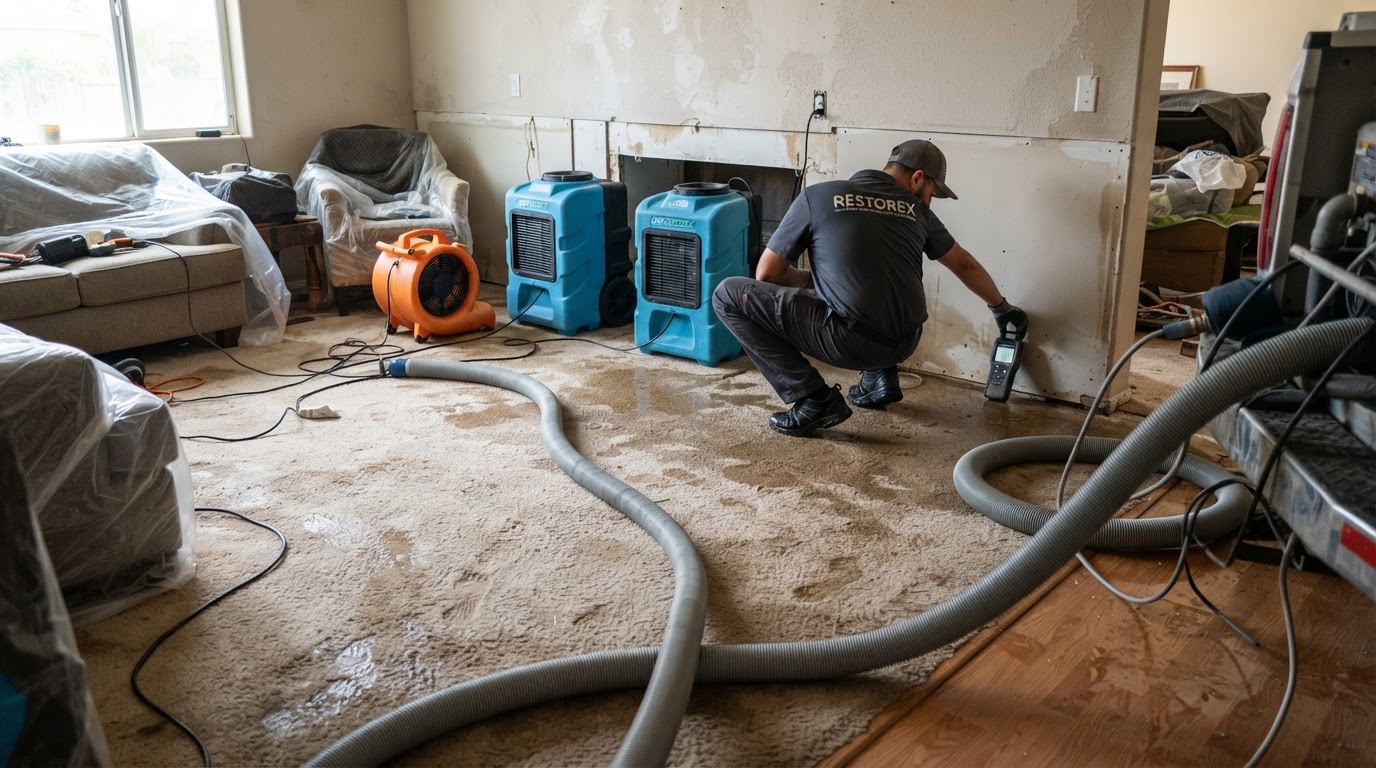
The protocol is fixed. We contain first — six-mil polyethylene containment under negative air with HEPA-filtered air scrubbers, so aerosolized material does not leave the work area. We work in full PPE — suit, double gloves, eye protection, respirator.
Then we remove all porous contaminated material — carpet, pad, drywall, insulation, fabric, anything that has contacted blood or bodily fluid — and dispose of it as regulated medical waste through a licensed medical-waste hauler with a documented manifest. Non-porous surfaces are disinfected with EPA-registered hospital-grade disinfectants (peroxide and quaternary formulations) and sealed where a stain remains in a structure that will be re-covered.
The order — contain, remove, disinfect, verify — is what keeps the rest of the home clean and the crew safe. Skipping the containment is how a trauma scene spreads biohazard into adjacent rooms through the air.
Discretion and documentation
Unmarked vehicles on request, no scene tape or branded signage left on site, and crews trained to work without drawing attention. For a family and a neighborhood, the goal is that no one knows a remediation happened — only that the scene is safe again.
We provide the documentation the family, the estate, or the property owner needs — photographs, a scope of work, and a waste manifest — without identifying the nature of the event beyond what is necessary for the file. That documentation is also what a property manager needs to return a unit to service, or what an estate needs to settle.
What crime scene cleanup costs
Crime scene and trauma remediation is priced by the scope — the affected area, the category of contamination, the volume of regulated waste, and any structural damage beneath. A contained single-room scene costs less than one where fluid has traveled through flooring into the subfloor, because the latter is a remediation and a partial rebuild. We scope the scene before quoting.
Homeowners insurance often does not cover trauma or crime scene cleanup the way it covers a sudden water loss. The responsible party, an estate, or a property owner typically pays, and we bill directly. The exception is sewage and Category 3 water backup, which may fall under a sewer and drain backup endorsement — and which is where this work connects to our broader biohazard and water damage cleanup scope.
Frequently Asked Questions
When can a crime scene be cleaned?+
Only after law enforcement and the medical examiner have finished their work and released the scene. We coordinate with the responding agency to confirm the release before any crew enters — we never enter an active scene.
Is crime scene cleanup covered by insurance?+
Often not by homeowners insurance the way a sudden water loss is. The responsible party, an estate, or a property owner typically pays for trauma and crime scene remediation. We document the scope and bill directly. Sewage and Category 3 water backup is a separate matter that may fall under a backup endorsement.
How discreet is the cleanup?+
Unmarked vehicles on request, no scene tape or branded signage left on site, and crews trained to work without drawing attention. The goal is that no one in the neighborhood knows a remediation happened — only that the scene is safe again.
Why can't a regular cleaning service handle a trauma scene?+
OSHA requires bloodborne pathogen training, full PPE, and regulated-waste disposal for any scene involving blood or bodily fluids. General cleaners lack the training, the containment, and the waste-hauler relationship — and leaving porous contaminated material in place leaves the infectious material behind.
Get a free assessment today
Whether it's happening right now or you found a stain this morning, our crew can be on site within 60 minutes. Call the emergency line or send a few details and we'll call you back.
Call (480) 555-0123